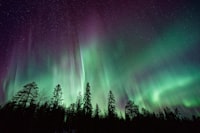
The Northern Lights, or aurora borealis, are the result of charged solar particles colliding with Earth's atmosphere — and seeing them well in Iceland comes down to three things stacking correctly: dark skies, clear weather, and enough solar activity. Get any one wrong and you'll miss it, which is why so many first-timers leave disappointed without understanding what actually went wrong.
Best Time of Year
September–March
The only window with dark enough night skies — Iceland's summer months have near-24-hour daylight, making the aurora invisible even when active.
Best odds: Late Sept–Mar
Peak Darkness: December–January
The longest nights give you the most hours of viewing opportunity, though weather and cloud cover are also more variable this time of year.
Most viewing hours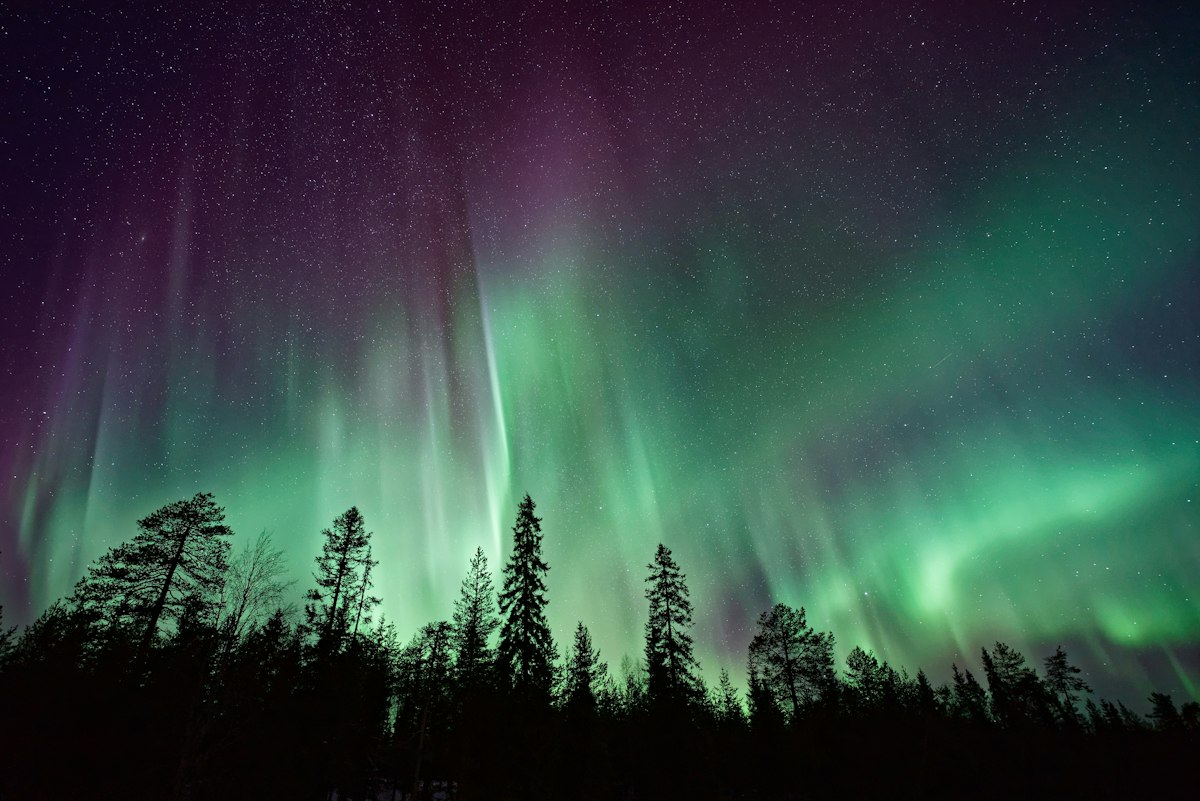
Getting Away From Light Pollution
Reykjavik's city lights wash out all but the strongest aurora displays. Most successful aurora trips involve driving 20-40 minutes outside the city to a dark spot — Þingvellir National Park, the Grotta Lighthouse area, or simply pulling off the Ring Road once you're clear of town. A dark sky matters more than almost anything else in the equation.
Reading the Aurora Forecast
- KP index: measures geomagnetic activity — KP 2-3 can still produce a good show under dark, clear skies
- Cloud cover map: often matters more than the KP index — a KP 5 night with full cloud cover shows nothing
- Iceland's official aurora forecast (from the Icelandic Met Office) combines both cloud cover and activity into one map, which is the most useful single resource
- Give yourself 3-4 nights minimum — weather and activity don't line up every single night, and buffer nights meaningfully improve your odds
"Nobody sees the aurora on their first night by planning. They see it on whichever night the sky actually cooperates — which is why you need more than one shot at it."
Photographing the Lights
A tripod is close to essential — handheld long exposures rarely work. Manual focus set to infinity, a wide aperture, and an ISO starting around 1600-3200 with a 5-15 second exposure is a reasonable starting point, adjusted based on how bright the display actually is.
Booking a Guided Tour vs. Self-Driving
Guided aurora tours use real-time forecasting to chase clear patches of sky, which meaningfully improves odds over staying in one fixed spot — particularly useful if you're only in Iceland for a few nights and can't afford a missed opportunity. Self-driving gives more flexibility but requires you to do your own forecast-reading.
Zentrevo's Iceland winter packages include multiple aurora-viewing nights built into the itinerary specifically to hedge against any single night's weather, plus a local guide who tracks the forecast in real time.